Winter Growing Guide
- Post author:cre8tive
- Post published:May 4, 2026
- Post category:Uncategorized
Grow Through Winter: A Seasonal Planting Guide for New Zealand Gardeners
Winter in New Zealand is extremely cold, frosty and icy in some regions and often seen as a quiet season for gardeners – but it’s far from a time to pack away the tools. With the right crops, good planning, and the warmth of an Eden Greenhouse, winter becomes a valuable season for growing hardy vegetables, enriching your soil, and preparing for a strong spring ahead.
This guide is tailored for New Zealand’s climate zones – from the frosty alpine South to the milder north – with planting ideas for outdoor beds and glasshouse environments.
Getting Ready: Winter Garden Essentials
- Clear autumn debris to reduce overwintering pests and fungal disease.
- Top up compost or mulch to insulate roots and improve soil.
- Rotate crops to prevent nutrient depletion and disease build-up.
- Use frost cloth or cloches in cold-prone areas.
- Take stock of tools and repair or clean ahead of spring.
What to Plant Outdoors in Winter (by Region)
North Island – Warmer Regions (Auckland, Northland, Bay of Plenty)
Winter temperatures are relatively mild, so hardy vegetables and herbs can still thrive outdoors.
Vegetables:
- Broad beans
- Snow peas
- Spinach
- Silverbeet
- Carrots
- Radish
- Beetroot
- Spring onions
Herbs:
- Coriander (loves the cooler weather)
- Parsley
- Mint (can slow down but persists)
- Thyme, oregano, and chives
Tip: Sow leafy greens in succession every 2–3 weeks for a constant supply.
Cooler North Island & Lower South Island (Wellington, Nelson, Wairarapa, Christchurch)
Frosts are frequent but daytime temperatures still support slow-growing crops. Focus on root veg and brassicas.
Vegetables:
- Garlic (plant in mid to late June for summer harvest)
- Onions and shallots
- Kale and silverbeet
- Cabbages and broccoli
- Turnips and swedes
- Peas (early varieties)
Herbs:
- Parsley and coriander
- Oregano, thyme, and sage
- Chervil (cool-season herb)
Tip: Apply mulch to protect root crops and suppress winter weeds.
Cold/Alpine Areas (Central Otago, Queenstown, Inland Canterbury)
In the coldest regions, outdoor gardening slows significantly – but hardy crops and prep work still have a place.
Vegetables:
- Garlic and shallots (plant before the ground freezes)
- Broad beans (early June or wait until early spring)
- Rhubarb crowns (plant or divide)
- Cover crops (like lupin or mustard to improve soil)
Tip: Focus on garden clean-up, composting, and seed-starting in your Eden Glasshouse.
What to Grow in Your Eden Greenhouse in Winter
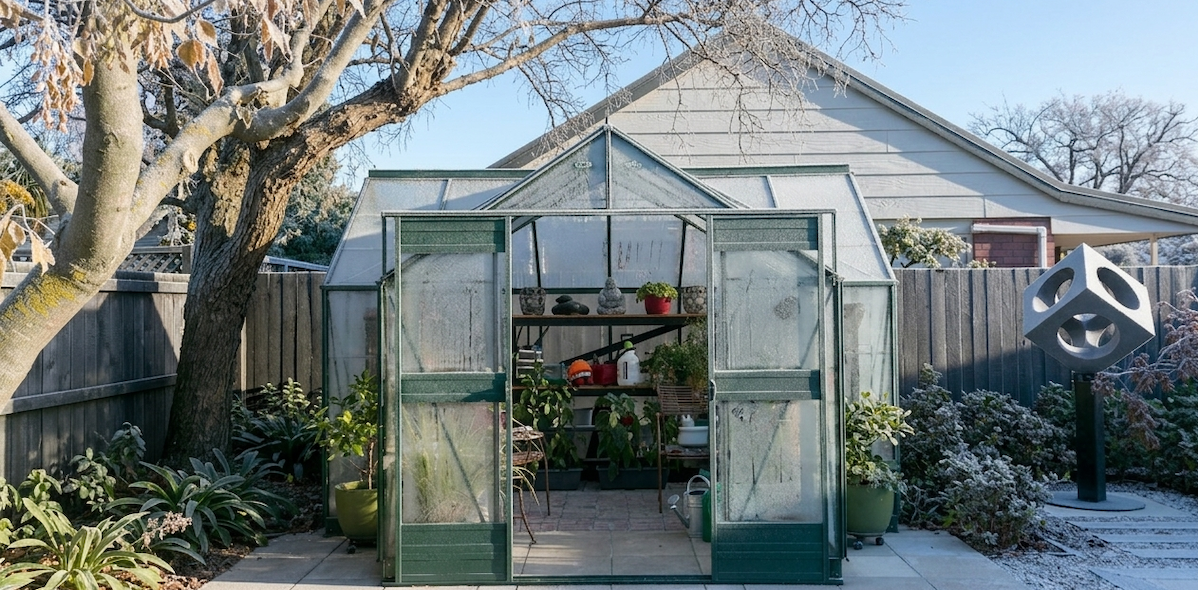
Your Eden Greenhouse is a winter haven for growing fresh produce in even the coldest conditions. Keep crops protected from frost, warm with passive heat (thermal mass or water barrels), and ventilated on sunny days.
Perfect for winter growing:
- Lettuce, rocket, mizuna, and mesclun
- Pak choi and tatsoi
- Spinach and silverbeet
- Spring onions
- Beetroot (small varieties)
- Radish
Herbs to grow in your greenhouse:
- Basil (with a heat mat or insulation)
- Coriander
- Dill
- Parsley
- Mint (in pots to contain spreading)
To keep your winter crops thriving in even the coldest regions, use passive solar heating techniques – such as placing stacks of pavers in the corners of your glasshouse, or using concrete flooring with layers of black plastic beneath to trap and radiate heat overnight. Position plants where they’ll receive the most winter sun, and consider heat mats or low-wattage underfloor heating pads (with a thermostat) for delicate seedlings or tropical herbs like basil.
Companion Planting & Winter Pest Tips
Though less active, winter pests like slugs, snails, and aphids can still linger.
- Use copper tape or crushed shells to deter slugs and snails.
- Net brassicas to protect against overwintering white butterflies (especially in warmer areas).
In your glasshouse, set up sticky traps and keep ventilation balanced to avoid mildew.
Flowers & Pollinator Plants for Winter
Winter flowers support early pollinators and brighten up your garden space:
- Violas and pansies – edible and hardy
- Calendula – keeps flowering in mild winters
- Sweet alyssum – attracts beneficial insects
- Primulas and winter snapdragons – great in pots and beds
Fertilising & Watering in Winter
- Go easy on fertiliser – most crops grow slowly and don’t need frequent feeding.
- Use slow-release or seaweed-based fertilisers.
- Water early in the day to avoid cold-damaged roots.
- Avoid overwatering in glasshouses – cool, humid air can lead to fungal issues.
Winter doesn’t mean stepping away from the garden – it’s a season of quiet growth, preparation, and resilience. Whether you’re sowing leafy greens in your Eden Greenhouse or planting garlic in frosty soil, winter offers meaningful ways to stay connected with your garden.
From soil building to slow-growing crops, every task you do in winter lays the foundation for a thriving spring.